At Despaña, we've long admired the tradition and flavor that surround atún rojo — Spain's revered wild bluefin tuna. But we've waited patiently to partner with a brand that truly honors that heritage.
We're proud to carry conservas from HERPAC, a family-owned producer based in Barbate, the beating heart of almadraba fishing. These tins are more than just seafood. They're a product of culture, time, and deep respect for the sea.
Whether you've encountered the term almadraba before or are just now discovering one of Spain's most sacred sea rituals, here's the full story — from the Phoenicians to your pantry.

The almadraba is an ancient, sustainable method of catching wild bluefin tuna that dates back over 3,000 years. It originated with the Phoenicians and has been practiced continuously along Spain's southern coast — particularly in the province of Cádiz — ever since. The Romans carried it further. The Moors refined it. And the fishing towns of Barbate, Zahara de los Atunes, Conil de la Frontera, and Tarifa have kept it alive through the centuries.
The word itself is Arabic in origin — al-madraba, meaning "the place where one strikes." And once a year, for just a few weeks in spring, it still is.
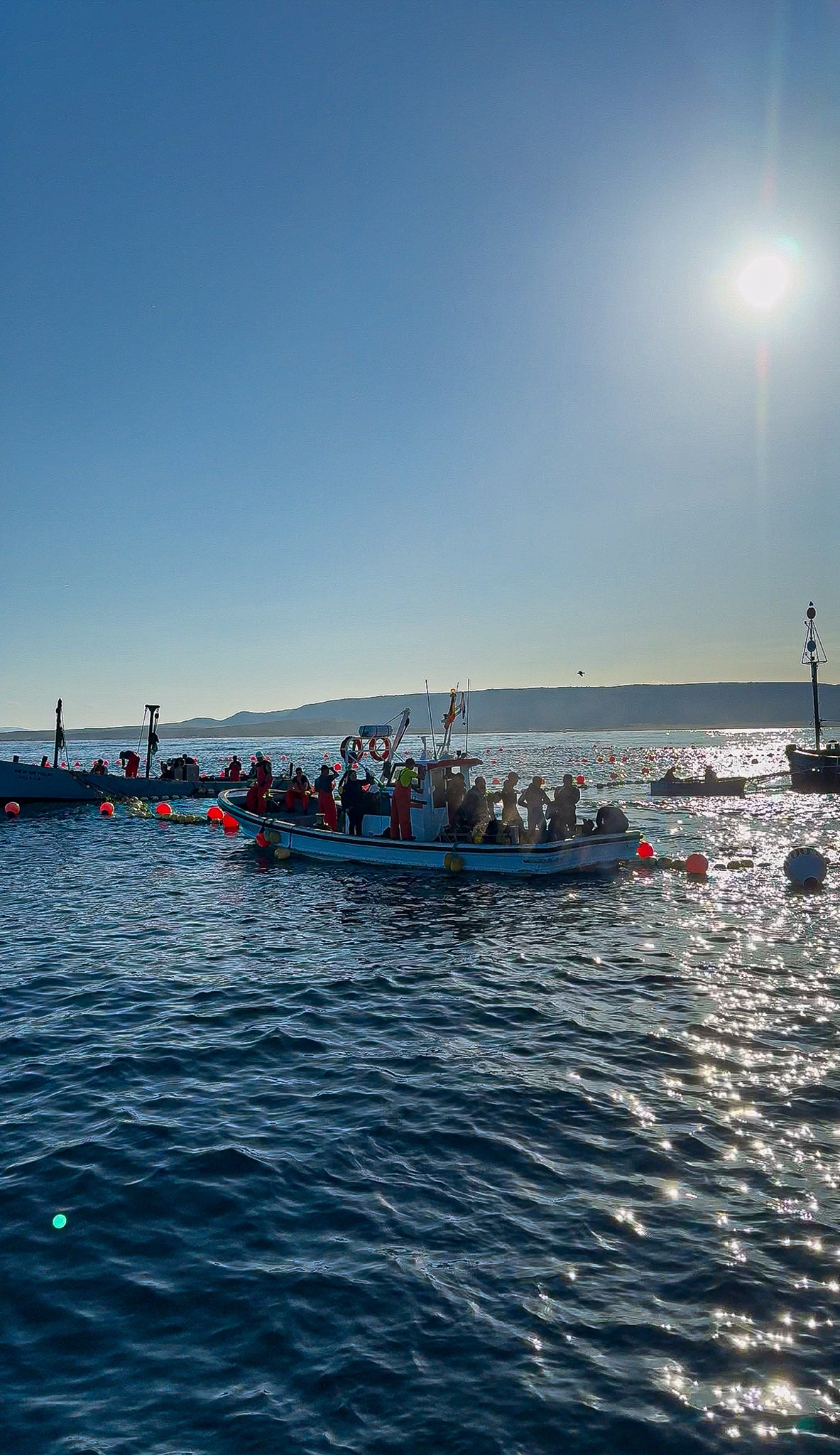
This technique involves setting up a vast labyrinth of nets near the Strait of Gibraltar — a critical migratory corridor where bluefin tuna pass each spring, traveling from the cold Atlantic into the warmer Mediterranean to spawn. The nets guide the fish gradually toward a central chamber known as the copo. Then, at the precise moment determined by the arráez — the master of the almadraba — a coordinated team of fishermen raises the nets from below, bringing the tuna to the surface.
What follows is called the levantá: a controlled, ancient harvest that has remained essentially unchanged for three millennia.
From Field to Factory: An Artisanal Process
Bluefin tuna (atún rojo) is among the most prized fish in the world — famed for its marbling, richness, and complexity of flavor. In Japan, it commands record-breaking prices at auction. But what many don’t realize is that Spain’s almadraba-caught bluefin rivals the best of Japanese tuna, and is considered by many experts to be even more ethically and environmentally sound.
The almadraba method is seasonal, as it only takes place during the spring migration of the tuna. It's highly selective with no bycatch and managed under strict quotas. These points are rooted in tradition and with full transparency.
This is not industrial fishing. It's closer to a ritual.
Barbate is more than a fishing town. It's a living archive of Andalusian maritime culture. The air here smells like salt and smoke. Families grow up with the the sea. The almadraba isn't a historical artifact in Barbate — it's the calendar. It's what determines when summer starts.
HERPAC is among the few producers in the region that turn this precious resource into shelf-stable conservas without compromising on tradition, quality, or traceability. Their facility sits close to the water. Their fish is processed just steps from where it's caught, at peak season, before the oils and proteins have had any chance to degrade.
That proximity to source is everything with tuna of this quality.
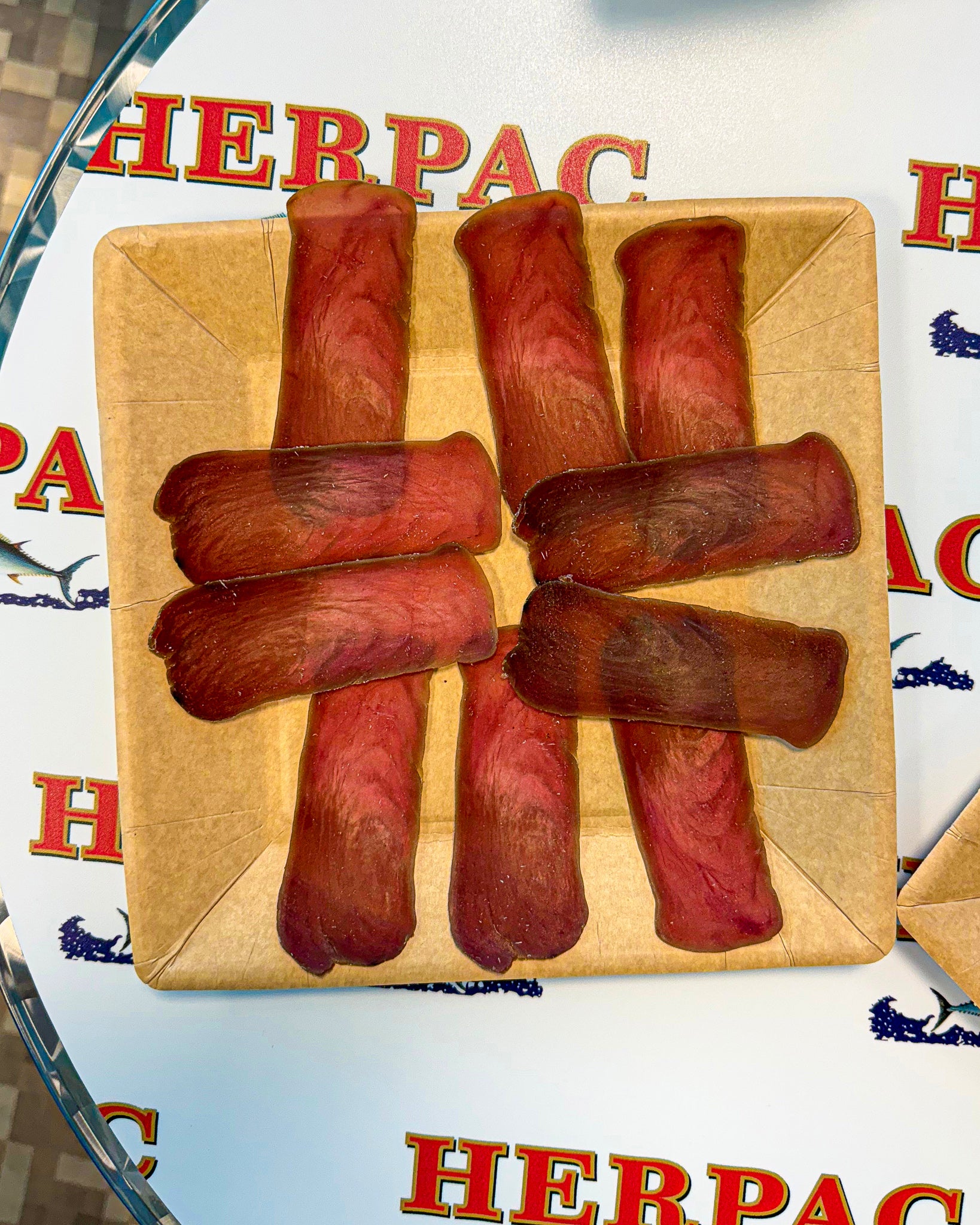
Made from the salt-cured, air-dried loin of the almadraba bluefin, mojama has been produced along the coast of Cádiz for centuries — the technique arriving via the Moors, who called it musamma. The loin is packed in coarse sea salt, cured for days, then hung to dry in the coastal wind until it becomes something entirely transformed: deep burgundy in color, firm and sliceable, with the intensity of a great cured meat and the unmistakable depth of the sea.
In Spain, mojama is eaten sliced paper-thin with a thread of olive oil and a few Marcona almonds
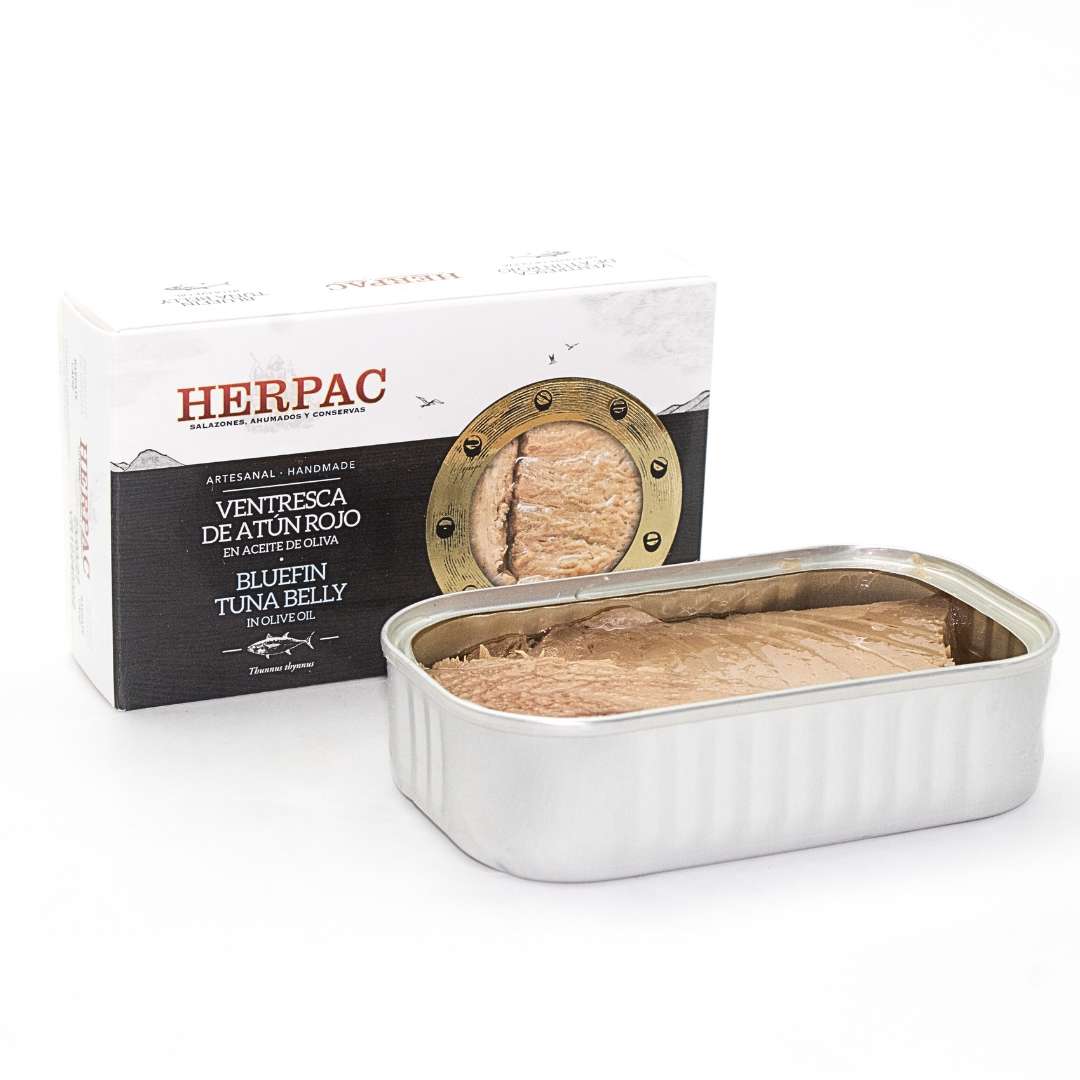
HERPAC's bluefin is harvested at peak season and processed just steps from where it's fished. Each cut is trimmed by hand, gently cooked, and preserved in extra virgin olive oil to highlight its rich, natural flavor — nothing added, nothing masked.
Despaña chose HERPAC for their integrity. They don't just source bluefin — they're embedded in the entire cycle of the almadraba. Their tins capture the full story of this fish, from the migration waters of the Atlantic to the traditions of Barbate.
Each tin is a record of a specific season. A specific harvest. A specific stretch of coast where the water runs fast between two continents.
The finest almadraba bluefin doesn't need elaborate preparation. These are the ways that let the fish speak for itself.
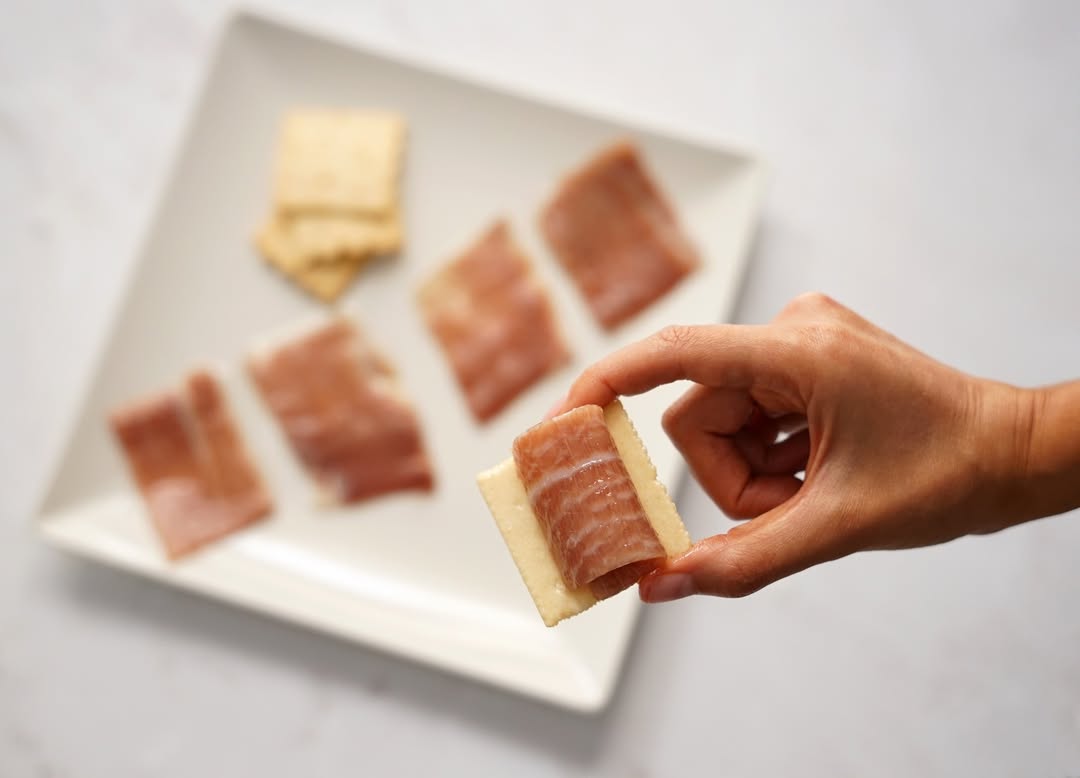
Ventresca, simply plated: Open the tin, drain, and plate as-is. Drizzle with good extra virgin olive oil and a pinch of Flor de Sal. Serve with bread or crackers. This is how they eat it in Barbate.
Tarantelo on pan con tomate: Layer slices over bread rubbed with ripe tomato, finish with a few drops of aged sherry vinegar. One of the best bites in Spanish cuisine.
Loin in a bocadillo: The firm loin is perfect in a sandwich — the classic bocadillo de atún with olive oil, tomato, and good crusty bread.
Mojama with almonds and olive oil: Slice paper-thin. Arrange on a cold plate with Marcona almonds and your best olive oil. Serve with a glass of Manzanilla or Fino sherry.